
The Shapie Journal
Abstract LED Wall Art: Choosing Shape, Colour and Light for Your Home
Abstract LED wall art combines an abstract canvas composition with integrated lighting that brings selected forms or lines into focus after dark. The choice is about how shapes, colour and light work together, both within the image and in the room around it.
You do not need to recognise a place or a character to connect with a painting. A strong geometric form, an unexpected colour relationship or a line that seems to move across the canvas can be enough to hold your attention.
Illumination adds another way to experience those elements. A broad area of colour may lead the daytime image, while a few lit contours become the main structure in the evening. Looking at both views helps you choose the complete artwork.

Start with the shapes you enjoy
Notice whether you are drawn to clear geometry, flowing marks or more irregular arrangements. A single prominent form can feel very different from a canvas filled with smaller, overlapping details.
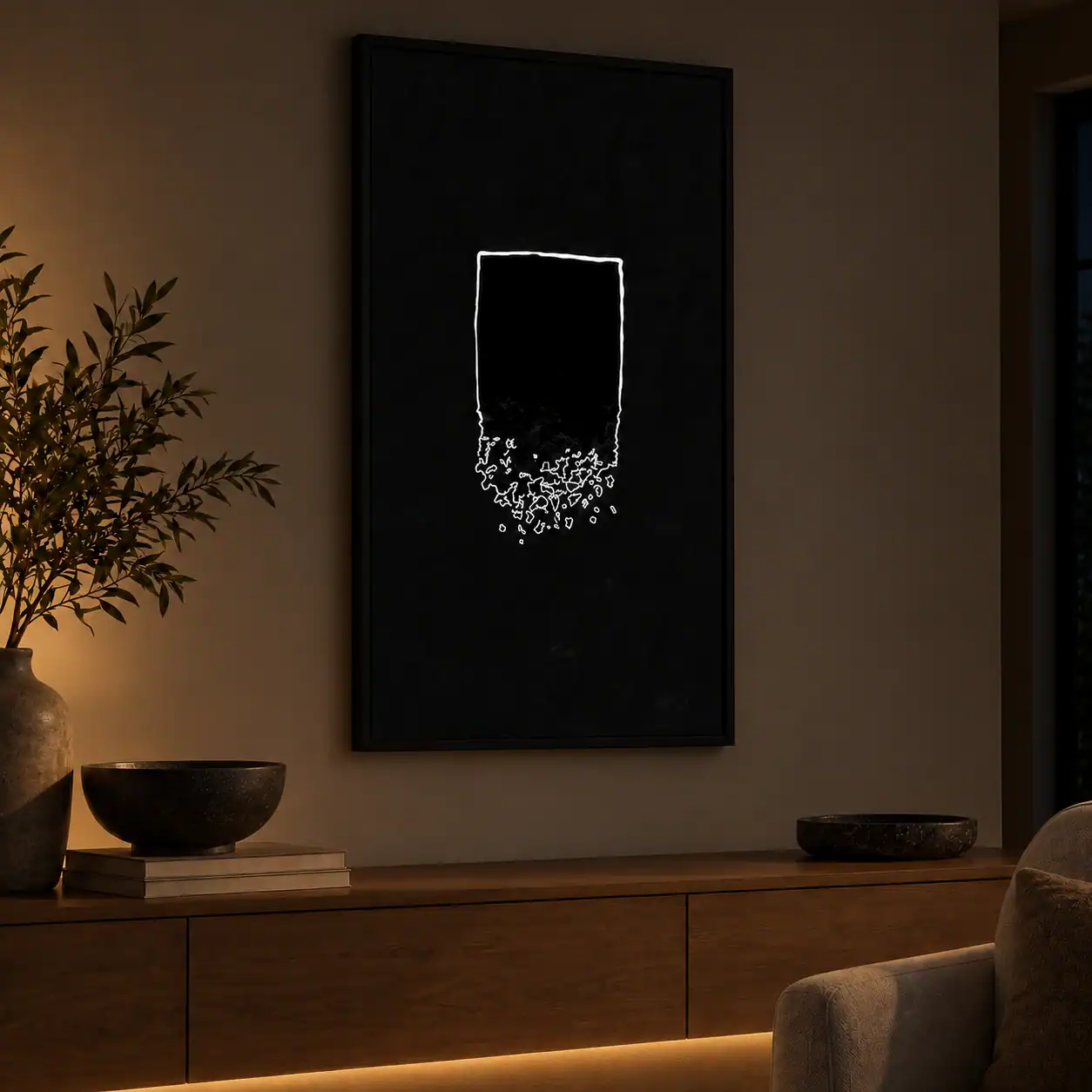
In Fragmented by The Shapie, a dark rectangular form appears to break into smaller pieces against a pale background. The relationship between the solid shape and its scattered fragments gives the image its direction.
You might read that as movement, change or simply a visual pattern you enjoy. You do not need to agree on one interpretation to choose an abstract painting for your home.
Look at the composition from a distance as well as close up. Which shape do you notice first? Does your eye stay in one place or move across the image? Those observations are useful starting points for choosing a piece you want to see regularly.
Decide what colour should contribute
Abstract canvas wall art can introduce a strong accent or work within a palette you already have.
If you like expressive colour, identify one or two tones you would enjoy seeing beside your furniture. You can repeat a small amount elsewhere in the room without matching every object to the painting.
A monochrome piece takes a different approach. In Fragmented, the contrast between the dark central form and the pale surrounding area carries the daytime composition. That contrast can give a neutral interior a focal point without introducing a new dominant colour.
Judge the image itself before assuming that a colourful painting will feel busy or a black-and-white one will feel quiet. Scale, spacing and the arrangement of shapes matter too.
Pay attention to the space between the forms
The areas around an abstract shape help define it. An image with one small, concentrated form can have a very different balance from one in which marks fill almost the entire canvas.
Consider that spacing alongside the objects near your wall. Shelves filled with books, patterned upholstery or a large screen may already provide plenty of detail. A composition with more open space could create a useful pause between them.
In a simpler room, a denser or more colourful artwork might provide the visual activity you want. Try to judge the whole area from your usual seat, with the painting imagined at its intended size.
Compare the illuminated composition separately
The night view of an abstract light painting deserves its own attention.
In the Fragmented evening visual, white illuminated contours define the rectangular form and the smaller pieces beneath it. The emphasis shifts from the daytime blocks of dark and pale colour to lines against a darker image.
Notice which parts remain connected through light. Does the evening design preserve the shapes that attracted you in daylight? Does it introduce an outline or pattern you would particularly enjoy after dark?
Compare the actual day and night views of the design you intend to order. Modern LED wall art does not have one universal lighting effect; the illuminated details are part of each artwork’s composition.
Give the canvas enough presence on the wall
A restrained design can still benefit from a substantial format.
If the wall has room, compare a larger size rather than assuming a simple abstract image should be small. A larger canvas gives its shapes and open areas more presence, especially when viewed across a living room.
Mark the complete framed outline on the wall with removable paper or suitable tape. Check the space around it and its relationship to the furniture below. Choose a size that feels deliberate without crowding the wall.
Our guide to large LED wall art offers a practical way to compare formats before ordering.
Let the light work with the rest of the room
An illuminated abstract painting can be an evening accent alongside your existing lamps. It gives the artwork another role once the main room lights are lower.
With a dimmable piece, begin gently and adjust from where you usually sit. A small amount of surrounding light can let you enjoy the room as well as the illuminated composition. Check for reflections if a television or monitor is nearby.
The painting can contribute to the atmosphere without having to provide the light for every activity. Our dimming and timer guide explains how The Shapie’s standard controls can fit an evening routine.
Choose around your own response to the artwork
You may want clean geometry, a fluid composition or a particular balance of colours. Begin with what you enjoy looking at, then check its size, frame, power arrangement and illuminated design together.
Explore The Shapie’s Abstract & Modern LED wall art to compare available designs. If you have a specific palette or composition in mind, discuss a custom light painting and agree how its daytime image and evening effect could work together.