

The Shapie Journal
Man Cave Wall Art: Choosing a Piece That Reflects Your Interests
A room feels personal when the objects inside it mean something to you.
That might be a guitar you regularly play, records you have collected over the years or a painting connected with a favourite car. The strongest man cave wall art belongs to that same story.
Before choosing a piece, think about what you enjoy doing in the room and what you would like to see every day.
LED wall art for a man cave adds another consideration: how the artwork looks when you turn down the main lights. A printed canvas can bring colour and character during the day, while its illuminated details create a different focal point in the evening.
Begin with a genuine interest
Choose a subject you have a connection with, rather than something that simply looks appropriate for a man cave.
A particular car might remind you of one you owned or hope to drive. A racing circuit could connect with a memorable trip. A film, game or space-inspired scene might represent a world you enjoy returning to.
You do not need to display every interest on one wall. One strong reference often says more than a collection of unrelated decorations.
Cars and motorsport
Car wall art can focus on a vehicle’s design, its history or the feeling you associate with driving.
Think about whether you prefer a realistic scene, a colourful interpretation or the recognisable layout of a circuit. These give the room different visual characters.
The Shapie’s automotive collection includes cars and racing circuits, allowing you to compare subjects as well as daytime and illuminated views.
Films, gaming and imagined worlds
A character or scene can work as a personal reference without requiring the whole room to follow the same theme.
Consider the composition as well as the subject. Does it introduce colours that work with your furniture? Will the main figure remain clear from your usual viewing distance?
Explore movie and gaming wall art and choose a piece you enjoy as an image, alongside its connection with a favourite story.
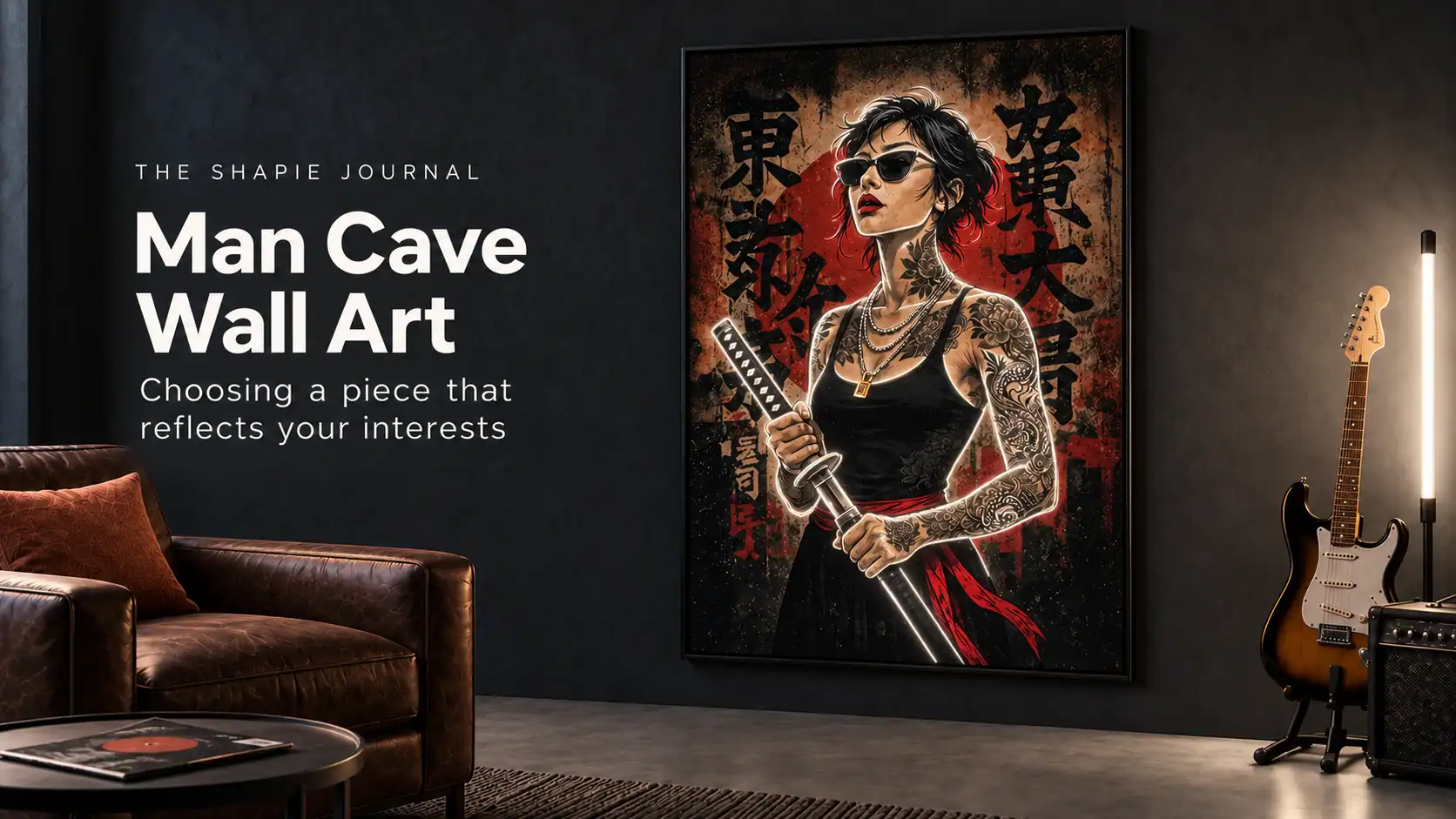
The No Bad Habits painting shown in the banner takes a different direction: a tattooed figure, a katana and Japanese-inspired graphic details. Its illuminated outlines give the portrait another presence after dark.
Give one painting a clear role
Look at the room before deciding where the artwork should go.
The wall above a sideboard may offer a clear display area. A painting beside a listening chair can help define a music corner. A piece near a desk can bring personality to a work or gaming setup.
Notice what already attracts attention. A television, display cabinet and illuminated artwork placed tightly together may leave little visual space between them.
Choose which feature should lead in each part of the room. A guitar or speaker can complement a painting without surrounding it with many smaller objects.
Choose a size with enough presence
A painting can look smaller once it is placed above substantial furniture.
Measure the available wall and consider the relationship between the artwork, the furniture below it and nearby fixtures. Mark the proposed dimensions with removable tape, then look from the doorway and your usual seat.
A larger piece can give a detailed composition more presence when the wall allows it. Leave enough room around the artwork so it feels deliberately placed.
Check the complete dimensions of the version you intend to order, including a frame where applicable. The Shapie’s painting size guide can help you compare the options.
Look at the night effect before choosing
An illuminated painting introduces a second composition to consider.
During the day, you see its printed colours and details. After dark, the lighting may bring headlights, stars, outlines or other selected elements forward.
Compare both views of the same product. Ask whether you enjoy the evening effect as much as the daytime image.
For a car-inspired room, the appeal might be a vehicle’s illuminated lines. For a space-themed corner, it could be stars and a figure emerging from a darker scene.
Our LED wall art guide explains how the printed image and integrated lighting work together.
Balance the artwork with your existing lighting
A man cave may already contain a television, gaming monitor, lamps or decorative LEDs.
Add the painting to that arrangement thoughtfully. Start with a lower brightness setting and check the effect from where you sit.
If you watch films or play games in the room, test the proposed position for screen reflections. In a listening corner, you may prefer the artwork beside a softly lit lamp.
The aim is an evening setting you enjoy using. The painting should be easy to appreciate without every light competing for attention.
Make everyday use practical
Before ordering, consider the power option and how you will reach the controls or charging connection.
A rechargeable Shapie painting can operate without a connected external cable while lit, with periodic charging required. A wired painting needs a suitable power connection.
Where available, timers and app scheduling can help the lighting fit your routine. Follow the instructions for your painting’s control system.
These choices are easier to make before the artwork has a fixed position on the wall.
Consider a custom piece when the reference is personal
Sometimes the idea you want is more specific than a ready-made design.
It could be your own car, a meaningful location or a composition connected with a shared memory. Explain the main reference and identify which details matter most.
With custom LED wall art, discuss the daytime image and proposed illuminated effect together. Both should contribute to the same idea.
You can discuss a custom painting with The Shapie or explore the full collection to find an existing design.
The best man cave wall art is a piece you want to live with: something that reflects your interests, fits the room and remains enjoyable when the evening lights come on.