

THE SHAPIE JOURNAL
Build custom motorcycle LED wall art around one recognisable bike and one clear story. Its shape, riding position and setting can carry the daytime image; carefully selected illuminated details can give that story a second expression after dark.
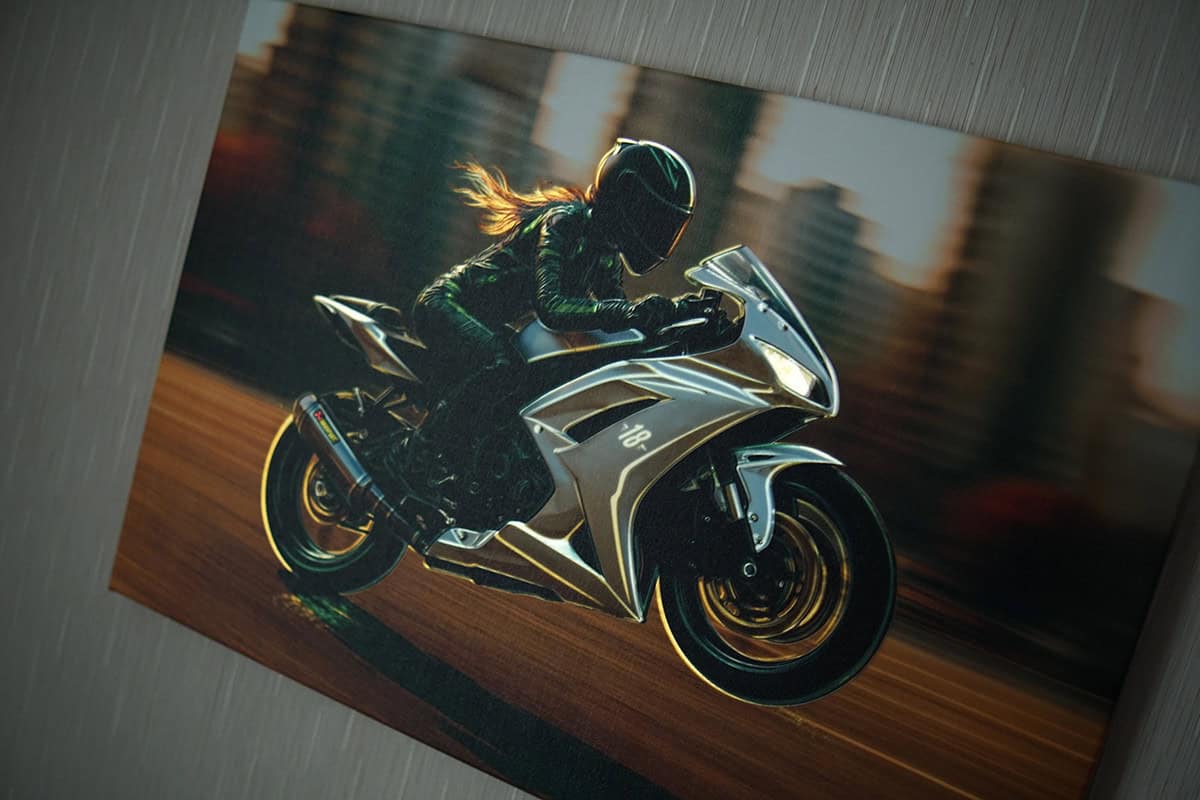
Motorcycle LED wall art combines a motorcycle image with integrated lighting. For a personal commission, the useful question is which details make the machine or moment meaningful to its owner. The photographed rider artwork illustrates how posture, bodywork and background can work together in a dynamic composition.
Begin with the bike you recognise
A broad category such as “sports bike” leaves many decisions open. Fairing shape, wheel design, colour and the position of the rider may matter much more to the owner than a dramatic background.
Write down the two or three features you would notice if they were wrong. That gives the artist a practical order of priorities and helps preserve the identity of the bike when the image is simplified.
Choose between a portrait and a riding scene
A stationary motorcycle portrait gives the machine visual space. A riding scene introduces posture, movement and a setting, which may be the more personal choice if the memory belongs to a road or journey.
In the archive photograph, the leaning rider and blurred background make movement part of the subject. Our design preference would be to keep the motorcycle readable first, then use the background to support that sense of speed.
| Direction | What it emphasises | Useful reference |
|---|---|---|
| Bike portrait | Bodywork, colour and proportions | A clear view of the complete machine |
| Rider and bike | Posture and personal connection | A photograph where neither subject is obscured |
| Journey-inspired scene | A memorable place or route | Separate references for bike and setting |
Give the night design its own priorities
Consider what should remain recognisable when light becomes the strongest element. A headlamp, a fairing edge or selected mechanical lines could be a starting point, subject to the artist assessing the design.
Lighting every visible detail can give each line equal importance. A smaller selection may preserve a clearer silhouette. Agree the actual illuminated elements in the preview rather than assuming that a real motorcycle light will automatically be reproduced.

Prepare a brief the artist can use
- Identify the exact bike and the details you want retained.
- Provide the best original files available, with permission to use them.
- Explain whether the rider, machine or place is the main subject.
- Describe the evening details you would like to discuss.
- Include the wall dimensions and a photograph of the intended position.
Separate essential features from optional ideas. This makes revisions more focused and gives the artist room to propose a composition that works at the chosen size.
Use enough canvas for the defining details
A larger format is worth considering when the available wall allows it, especially if small mechanical features are important. Compare a paper outline with the actual wall and normal viewing distance.
Leave room around the artwork and check the complete framed dimensions. For a close viewing position, inspect the detail; from the doorway, check whether the bike still reads as one strong subject.
Agree the image before production
The Shapie’s custom process includes review of the daytime artwork and lighting preview before production. Use that review to check the bike’s identity and the planned night effect separately.
Ask about feasibility, the selected format and the schedule before committing to a deadline. A focused brief gives a personal artwork a clearer foundation than a long list of unrelated additions.
Frequently asked questions
Can the artwork include my own motorcycle?
You can discuss a personal motorcycle image with the artist. Share clear references and confirm what can be achieved before production.
Does the reference need to show the bike at night?
A clear daytime reference can explain shape and colour. The proposed illuminated details should be discussed separately.
Should I include a rider?
Include the rider when posture or a shared memory is central to the idea. A bike-only portrait gives more attention to the machine itself.
Can every mechanical detail light up?
Do not assume every detail is suitable. Ask the artist which elements can be illuminated clearly at your chosen size.
What should I check in the preview?
Check the recognisable bike features, overall composition and exact illuminated elements before approving production.