
The Shapie Journal
Custom LED Light Painting: From a Personal Idea to Illuminated Art
A custom LED light painting combines a canvas image developed around your idea with integrated lighting that highlights selected details after dark. With The Shapie, the personal choices extend from the subject and colours to the night design, size, frame and power option.
Your starting point might be a photograph you return to, a place with a particular meaning or an image that exists only in your imagination. You do not need to turn it into a finished design before discussing it with the artist.
The most useful first step is to explain what matters about the idea. That gives the artwork a direction and helps decide which details deserve attention in daylight and which could gain another presence through light.

Start with a connection, then develop the image
A personal painting does not have to be a literal reproduction of a photograph. You might want to keep a familiar subject while changing the colours, simplifying its surroundings or giving it a more expressive treatment.
For example, a photograph of a city could become a composition centred on its skyline. A favourite car could sit in a setting connected to a memorable journey. A family reference could be expressed through a small group of symbols rather than a formal portrait.
These are directions to explore together. Explain which parts are essential and where you are happy for the artist to suggest an approach.
Give several references one clear purpose
It is natural to collect images while imagining custom LED wall art. One might show the colours you like, another the subject and a third the kind of atmosphere you want.
Tell the artist what each reference contributes. Otherwise, a collection of useful ideas can become a request to fit every object into the same canvas.
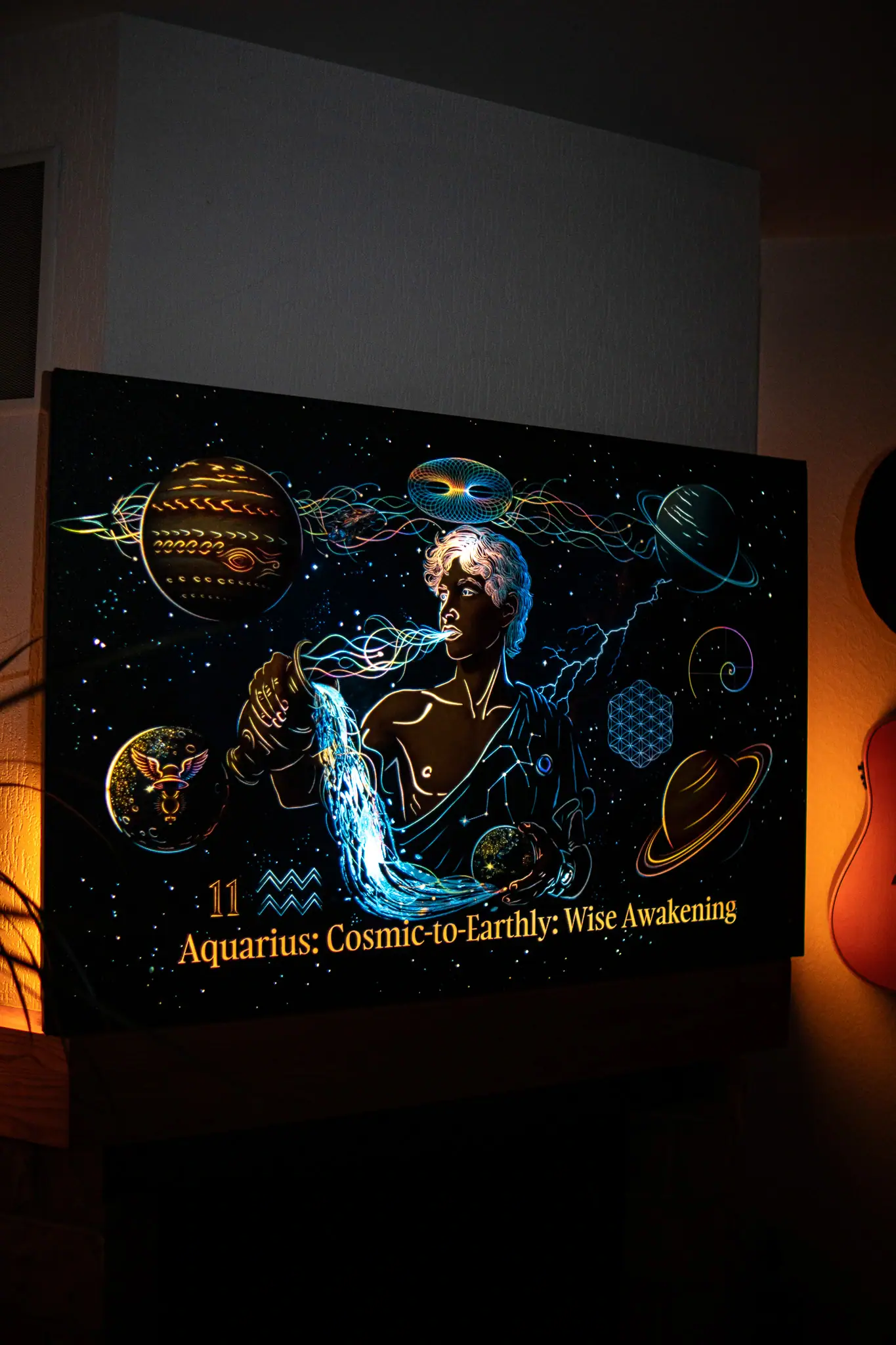
The Aquarius artwork shown here offers an example of a personal composition with several connected elements. A central figure, planetary imagery, flowing lines and symbols share the image. Its night design gives selected parts their own illuminated emphasis. You can read the story behind this custom Aquarius painting to see that particular project in more detail.
For your own idea, decide what should lead the composition and what can remain a supporting detail.
Choose what the lighting should reveal
The night effect is an opportunity to make another design decision.
A light source already present in the image can be a useful starting point: stars, windows, a lighthouse or a vehicle’s lights. You could also discuss selected outlines, an important symbol or lettering that belongs to the story.
Think about the order in which you want someone to notice those elements. If every detail has the same emphasis, the most meaningful part can become harder to find.
Ask how the proposed effect will work with the image you have chosen. Review it alongside the daytime design so that you enjoy both versions of the painting.
Understand the choices in your custom painting
The image and lighting are part of the creative brief. The physical format is another part of making the result feel right at home.
A wall photograph and a few measurements can make the size discussion more useful. If a larger canvas fits comfortably, consider it: personal details are easier to appreciate when the composition has enough space. Compare the complete outline, including the frame, from where you will normally view it.
If the project needs an unusual format or a particular control system, describe that before ordering so its feasibility and any additional work can be agreed.
Share a brief that leaves room for collaboration
A useful brief can be short. Describe the subject, why it matters and the room where the artwork will hang. Attach the best available original image or explain the idea in words.
Then identify the details you want to keep, any changes you would welcome and the elements you imagine lighting up. Include a preferred size, a rough budget and a date if timing matters.
For example: “I would like a painting based on this harbour photograph. Please keep the lighthouse and the curve of the coastline. I prefer a deeper blue evening palette, and I would like the lighthouse and a few windows to become the main illuminated details.”
That gives the artist a clear intention while leaving space to develop a balanced composition. The custom design preparation guide explains what to send and how feedback is handled.
Review the design before the physical artwork is made
The Shapie’s custom process includes reviewing the daytime visual and the illuminated design before production. This is the moment to check the subject, colours, proportions and emphasis of the lighting.
Digital design work normally starts after payment. If you are still exploring, discuss the project before ordering; a preview before payment is arranged individually. Refinements to the agreed idea are included, while a complete change of direction or non-standard technical work may require a separate quote.
Once the design is approved, the physical canvas artwork is made with its integrated lighting system. Confirm the current timing for your project, especially when it is intended for a particular occasion.
Make the finished piece part of everyday life
Consider the place where you will enjoy the painting, including access for power or charging. A rechargeable version can operate without a connected external cable while using its battery; a wired version needs a suitable power connection. Compare the power options before settling on the final position.
A custom LED light painting can carry something personal through both parts of the day: the full canvas image in daylight and selected illuminated details in the evening. Start with a clear idea of what matters to you, then explore custom light paintings by The Shapie and discuss how to bring it into the artwork.