

THE SHAPIE JOURNAL
Choose cabin LED wall art by the relationship between the building and its landscape. A small cabin can anchor a broad forest scene, while a very different illuminated detail, such as lightning, can give the same composition a dramatic evening character.
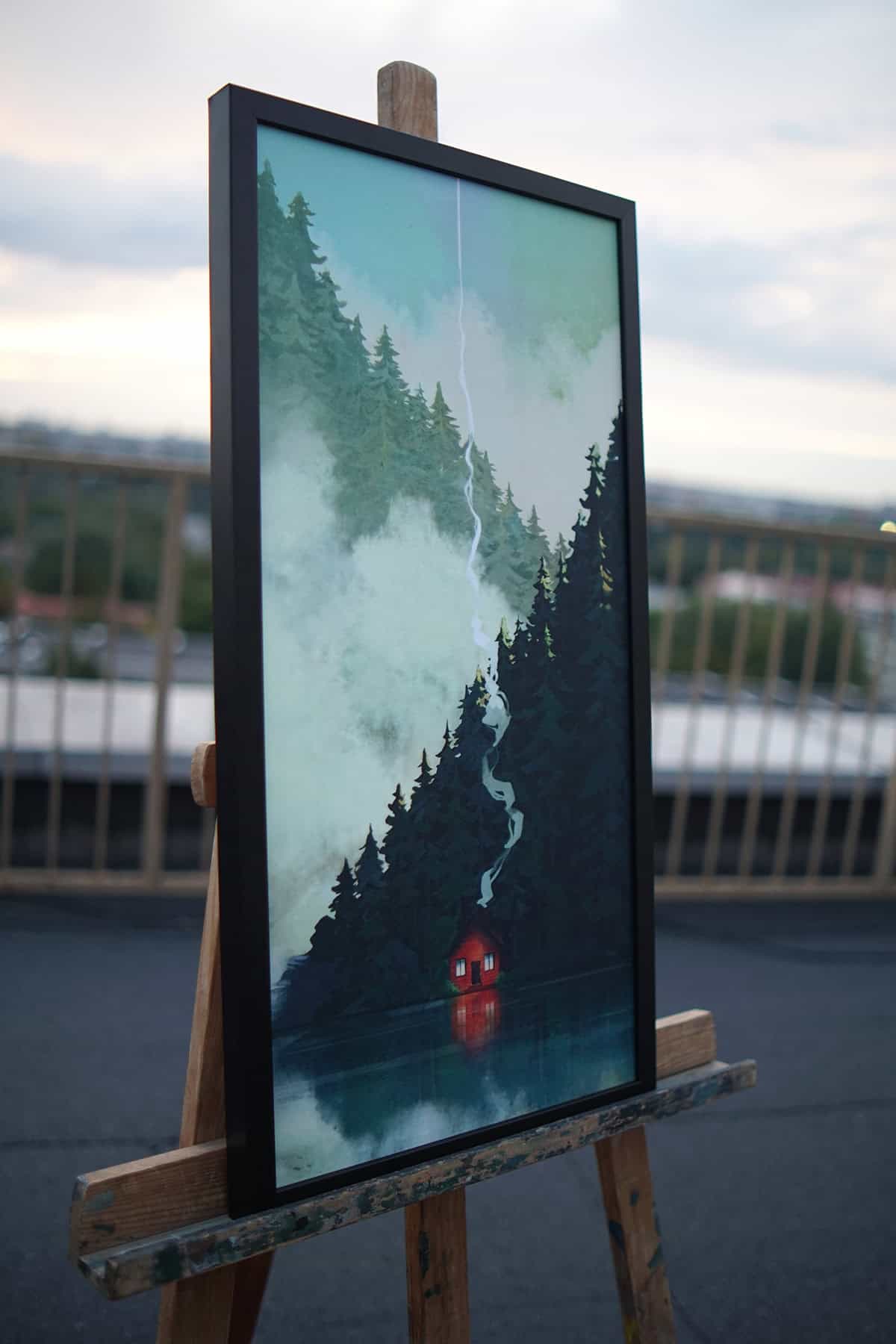
Cabin wall art places a small dwelling within a wider setting. In an LED canvas, selected light elements add a second way to read that scene. The photographed artwork pairs a misty conifer valley and tiny red cabin with an illuminated lightning bolt and small points of light after dark.
Find the real subject of the landscape
A picture with a cabin is not always mainly about the building. In this composition, the overlapping forest slopes occupy most of the canvas. The cabin provides a small point of orientation near the bottom.
Ask which part attracts you first. If it is the depth of the forest, a small building may be enough. If you want architectural detail, look for a composition in which the cabin occupies more of the image.
Understand what the small scale contributes
A tiny building helps the surrounding landscape feel expansive. Its colour can act as an accent without filling the scene. Here, the red cabin interrupts the green and grey palette in a very concentrated way.
Our artistic preference would be to give this image enough physical size for that small accent to remain discoverable. A larger canvas is useful when the wall allows it, provided the complete framed outline still has room around it.
Compare the two moods honestly
The daylight photograph presents a quiet, misty landscape. The night photograph introduces a bright, branching lightning line. Those are different visual experiences within one artwork.
Choose this kind of contrast because you enjoy both appearances. A cabin subject alone does not guarantee a soft or uniformly warm evening effect. The actual illuminated composition is the more reliable guide.
| Element | Daytime role | Evening role in this example |
|---|---|---|
| Forest slopes | Layering and depth | A darker setting around the light |
| Small cabin | A red focal accent | A small illuminated reference point |
| Lightning | Part of the scene | A strong leading line |

Choose a room that welcomes the contrast
A lounge, reading corner or personal retreat may suit the image if you enjoy both the forest subject and the storm-like night design. Consider the activities that take place there rather than assigning the painting to a room by name.
Look from the main seat and the entrance. A narrow vertical canvas may work where a broad landscape would be difficult to place, but the available dimensions should decide the final format.
Check the small details at your viewing distance
- Mark the proposed canvas size on the wall.
- View the outline from your usual seat.
- Inspect a close photograph of the cabin and lower forest.
- Compare the complete daylight and illuminated images.
- Consider how the strongest light line fits your evening lighting.
The benefit of this sequence is practical: it separates an appealing subject from a format that might make its smallest meaningful detail too hard to see.
Use the photograph as inspiration for the image
The archive photographs were taken on an outdoor rooftop to show the finished artwork. They do not establish outdoor installation suitability. Follow the product’s placement instructions and ask about any unusual environment before ordering.
For an indoor display, think about the surrounding wall colours and nearby objects. A restrained arrangement can give the forest’s depth and the small red accent more room to be noticed.
Frequently asked questions
Does cabin LED wall art always create a warm glow?
No. The evening character depends on the actual illuminated design. This photographed example uses a dramatic lightning effect.
Why is the cabin so small in the composition?
Its scale lets the forest remain the main subject while giving the viewer a small point of orientation.
Would a larger canvas help?
A larger format can make a small focal detail easier to inspect. Compare the available sizes with your wall and viewing distance.
Are rooftop photographs proof of outdoor suitability?
No. A photographic setting does not establish where an artwork may be installed. Check the product instructions.
Should I choose it mainly for the night effect?
Choose it when you enjoy both the printed landscape and its illuminated composition. You will see the artwork with the lights off as well.