
Art & light
Regular Wall Art vs LED Wall Art: What’s the Difference?
Compare regular wall art with integrated LED artwork through a real custom Brussels painting, made from a photograph supplied by a customer.
A painting can bring colour, character and a personal connection to your home. LED wall art offers another dimension: integrated light that becomes part of the artwork itself.
The main difference is how you experience the image. Regular wall art relies on daylight or room lighting to remain visible. LED wall art also has its own lighting, which can reveal selected details and create a different view after dark.
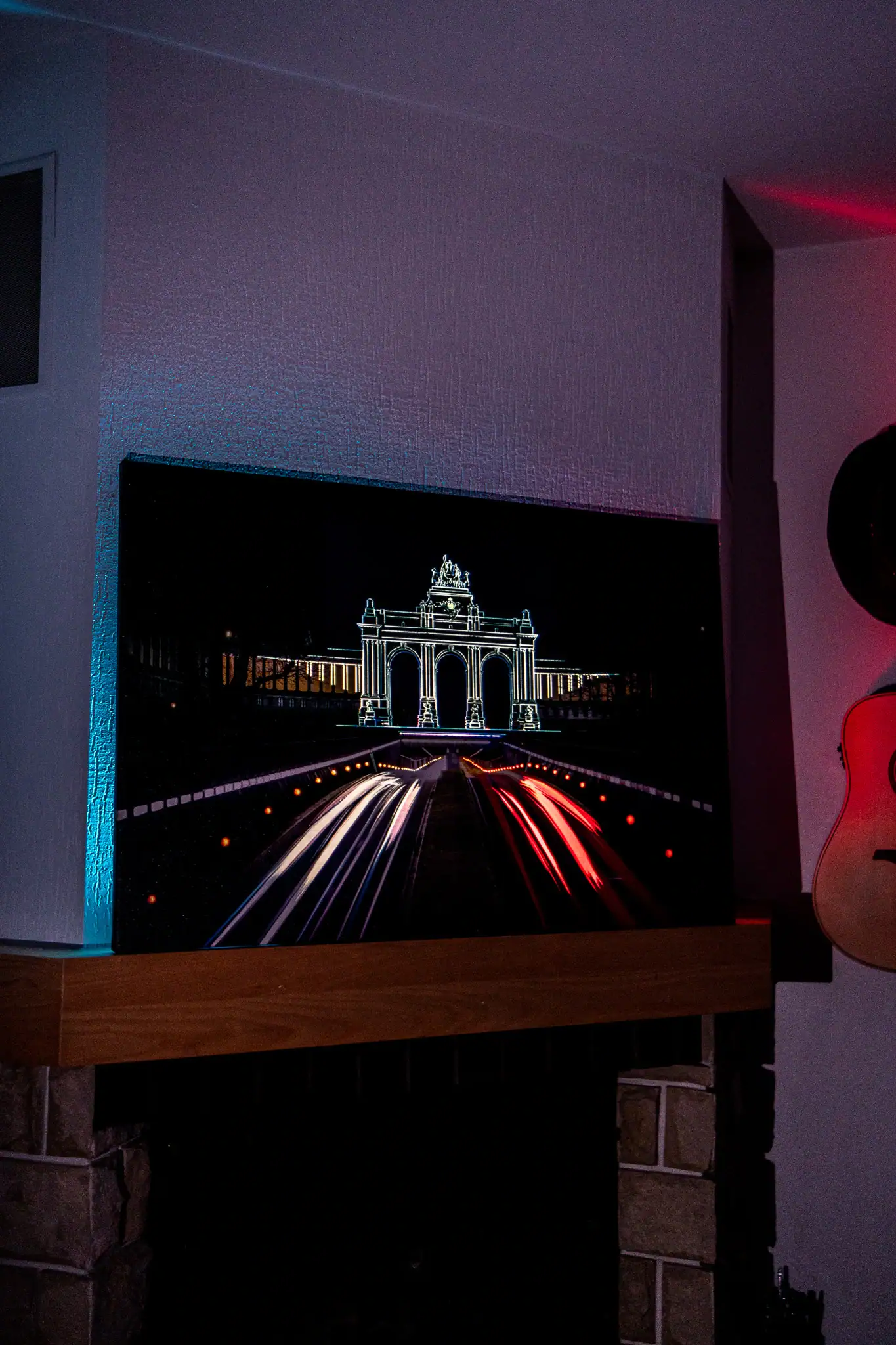
A custom Brussels artwork by The Shapie shows how this works. Made from a photograph supplied by a customer, it combines a printed city image with illuminated architectural details and traffic light trails.
What is regular wall art?
Regular wall art includes paintings, canvas prints, photographs and other decorative pieces without integrated lighting.
You see their colours, texture and composition through the light falling onto them. Daylight, a ceiling light or a dedicated picture light can all affect their appearance.
This gives you plenty of flexibility. You might choose a quiet landscape, an expressive abstract painting or a photograph that reminds you of somewhere meaningful. The image can become a focal point without adding another powered object to the room.
What is LED wall art?
LED wall art combines a physical artwork with an integrated LED lighting system.
At The Shapie, the printed canvas design remains visible when the lighting is switched off. When switched on, carefully selected illuminated details give the artwork another appearance.
Depending on the design, light might highlight a skyline, stars, outlines or elements within a photograph. The effect belongs to the composition, rather than simply shining a lamp onto its surface.
It is still artwork during the day. In the evening, it can also contribute decorative light to the room.
A real example: a customer’s Brussels photograph
This custom project began with a photograph supplied by a customer.
The image shows Brussels architecture above a road, with white and red traffic trails leading towards the central arches. Those existing features provided a natural starting point for the illuminated design.
In daylight, the canvas displays the complete photograph: the blue sky, building details, trees and sweeping lines of traffic.

After dark, the illuminated architectural outlines and traffic trails become more prominent. The white and red lines draw the eye through the image, while smaller lights help retain its depth.
The subject remains recognisable, but the emphasis changes. Details that were part of the printed photograph now become the centre of attention.
How do the two options compare?
| Feature | Regular wall art | The Shapie LED wall art |
|---|---|---|
| Daytime appearance | The image is visible through daylight or room lighting | The printed canvas image is visible with its LEDs switched off |
| Evening appearance | Depends on surrounding or dedicated lighting | Integrated LEDs reveal selected details |
| Role in the room | Visual decoration and a focal point | Visual decoration, a focal point and decorative illumination |
| Power | No power needed for the artwork itself | Wired or rechargeable options |
| Controls | Lighting is controlled separately, if used | Remote and app controls, including brightness and scheduling options |
| Personalisation | Depends on the artist or supplier | Custom image and illuminated details can be discussed with The Shapie |
Scroll sideways if needed to compare all columns.
Why shouldn’t your ambient light be a painting?
Many homes use small lamps or decorative lighting to create an inviting evening atmosphere.
An illuminated painting can contribute to that atmosphere too. Instead of choosing artwork and a decorative light as separate objects, LED wall art brings those roles together in one piece.
The Brussels project demonstrates this relationship particularly clearly. Its illuminated details follow light already present in the customer’s photograph. The evening effect feels connected to the subject and gives the image another way to be enjoyed.
The result depends on the artwork, its brightness and the surrounding room. Gentle nearby lighting can help its details stand out, while practical lighting remains useful for reading, working and moving around the space.
Does LED wall art need to stay plugged in?
The answer depends on the power option you choose.
A wired light painting needs a connected power cable while illuminated. A rechargeable version can operate without a connected cable while lit, then be plugged in when it needs charging.
The Shapie’s lighting controls also let you adjust brightness and use available timer or scheduling functions. You can choose when the painting contributes to the room’s atmosphere rather than leaving it illuminated continuously.
Which type of wall art is right for you?
Regular wall art is a good choice when you want an image to enjoy through your existing room lighting, with no power or charging requirements for the artwork itself.
LED wall art may suit you if you want that daytime image together with an illuminated evening view. Consider both appearances before choosing: the printed composition should appeal to you as much as its night effect.
For a custom project, a personal photograph can provide the starting point. As the Brussels artwork shows, architecture, existing lights and meaningful details within an image can become part of its transformation after dark.
Explore The Shapie’s LED wall art collection, or discuss turning your own photograph into a custom light painting.